







Adding a battery to a solar installation starts with a simple question: what should the system do for the property? A household may want more evening use of its own solar. A small business may want selected equipment supported during an outage. The inverter brand matters, but the model, battery voltage and supported controls determine the actual integration pathway.
Whether you own Deye, Sunsynk, GoodWe, Growatt, Sunforce, SOFAR or SolaX equipment, the aim is the same: storage that fits your energy use and works with the rest of the installation. Start with the inverter’s full model number, the circuits you want backed up and the energy you use after sunset. Those details make it easier to compare suitable Freedom Won batteries and the work needed to install them.
Deye: identify the voltage family first
For a Deye system, establish the inverter’s battery voltage family before choosing storage. Include the complete model code and whether the unit is already installed or part of a new proposal. Different inverter families can use different battery interfaces, even within the same brand. Matching the battery, inverter and controls at this stage helps avoid an unnecessary equipment change later.
For a Deye enquiry, include the property’s phase arrangement and the loads you want supported during an outage. Ask the proposal to identify the appropriate Freedom Won battery model, the communications method and the operating restrictions. These details make it possible to compare the complete system rather than isolated inverter and battery prices.
Sunsynk: define the backup outcome
With a Sunsynk system, start by deciding what you want powered during an outage. Lighting, refrigeration and communications may take priority over high-demand appliances. List the essential circuits and the equipment that may run together, then match both battery capacity and inverter output to that requirement. This gives you a useful backup plan as well as a way to use more of your stored solar.
Ask how the installation will balance ordinary solar self-consumption with a reserve for unexpected outages. A larger reserve leaves less energy for routine evening use; a smaller reserve changes the starting point for backup. The proposal should make that choice visible and explain how it can be reviewed if the household’s priorities change.
GoodWe: choose storage for your inverter model
Adding storage to a GoodWe installation starts with the inverter’s exact model and supported battery options. Check the battery voltage, communications and operating modes for that model before ordering. If you are replacing an older battery, confirm whether the new unit can use the existing controls or needs additional equipment. Find GoodWe documentation.
If the property already has GoodWe equipment, keep its installation paperwork and equipment-label photographs with the enquiry. Explain whether the aim is to add storage, replace an older battery or redesign the system. Those are different projects, and the existing inverter’s capability will influence the options.
Growatt: assess the existing installation as a whole
Adding a battery to a Growatt installation can involve retaining suitable existing equipment or changing part of the system. Provide the inverter model, monitoring history and original system diagram so the project team can assess those options. The proposal should explain which components remain, which need upgrading and how the finished installation will meet your energy and backup priorities.
Check the proposed expansion path too. A household expecting an electric vehicle or a business adding refrigeration may have a different load profile in a few years. Describe those plans, but ask the designer to separate today’s installed capability from any future option.
Sunforce: identify the installed model
For a Sunforce installation, use the full inverter model and generation when planning a battery upgrade. Clear photographs of the equipment label and the original installation details help identify the battery interface and operating limits. That gives the project team a sound starting point for selecting storage and checking whether any additional communications equipment is needed.
Owners can help by supplying readable photographs of the nameplate and a list of accessories or controllers already fitted. This is an information-gathering step; electrical inspection and any changes belong with the qualified installation team. Accurate identification reduces the risk of a proposal being built around the wrong version.
SOFAR: distinguish the storage architecture
SOFAR’s residential storage range includes three-phase HYD hybrid inverters. An integrated storage package and a separately specified battery-inverter arrangement can have different electrical and control requirements. Decide which arrangement suits the property, then check the exact products included in the proposal. View the SOFAR HYD range information.
For a high-voltage SOFAR system, include the inverter model, proposed battery and control arrangement in your enquiry. FWA can then review the relevant combination and configuration requirements. This is particularly useful for an existing installation, where the current equipment may affect which upgrade options are practical.
SolaX: confirm the battery pairing before purchase
The Australian SolaX X3-HYBRID G4 uses a high-voltage battery interface. Before specifying Freedom Won storage with a SolaX inverter, obtain confirmation for the exact models and configuration. A shared voltage category alone is not enough to establish that the two products can communicate and operate together. Read SolaX’s compatibility guidance.
If an existing installation does not support the desired battery directly, ask the designer to explain the available system options and their implications. A clear answer about the architecture is more valuable than a vague assurance based on a shared voltage label.
A measurable starting point for battery sizing
Suppose a property needs an average 1kW for six evening hours and another 0.4kW for eight overnight hours. The calculated energy demand is 6kWh plus 3.2kWh, or 9.2kWh at the loads. This illustrative calculation excludes losses and reserve. It describes consumption, not a recommendation for a particular battery model.
Now consider a 4kW appliance operating alongside other equipment. That peak may affect the power requirement even if it contributes relatively little to the daily energy total. Our sizing guide explains this distinction. Use measured data where possible and ask the proposal to state the assumptions behind both energy and power selection.
Compare Freedom Won storage options with a clear brief
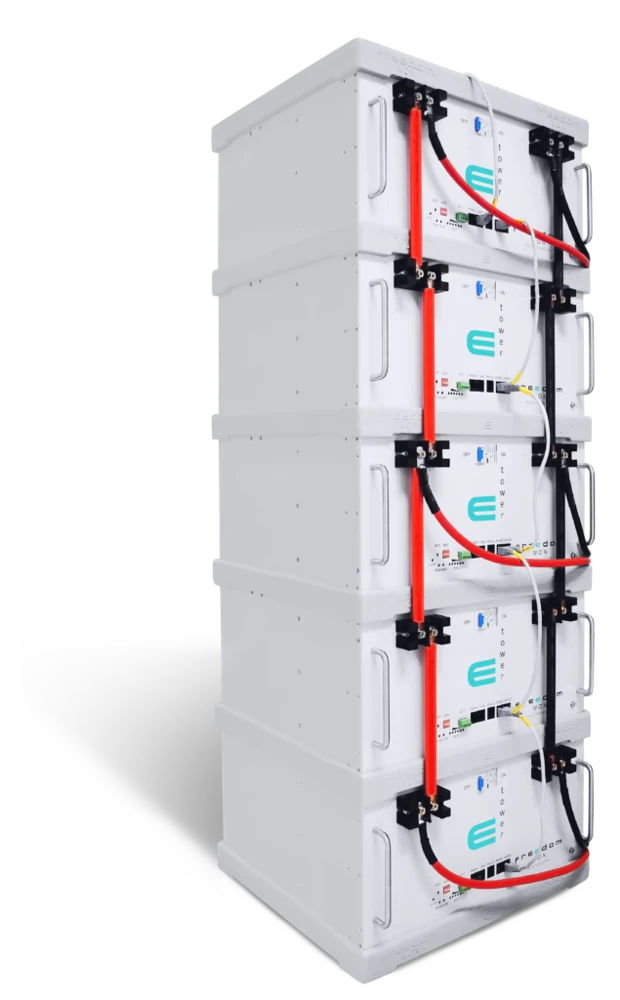
The eTower guide, LiTE Home guide and product range provide useful starting points. Each new battery family needs its own compatibility assessment; support for a LiTE model should not be assumed to extend to ENVA or another range.
Send our enquiry team your inverter details, location, recent consumption information and main priorities. We can help you narrow the product discussion and identify the appropriate solution-provider pathway. A clear brief makes it easier to compare storage capacity, backup expectations, installation scope and future expansion before you commit to a system.
Frequently asked questions
What determines whether a battery will work with my inverter?
The exact inverter and battery models, voltage range, communications, software and supported operating modes must match the proposed configuration.
Can I add a battery to an existing solar installation?
A designer needs to assess the existing inverter, electrical arrangement and supported integration options. The answer depends on the installed equipment and intended duty.
Which information helps FWA assess my enquiry?
Provide the site location, inverter model, existing battery details if applicable, consumption data and priorities such as evening solar use or essential-load backup.
Related reading
Sources & documentation
Technical references: Freedom Won Australian interfacing guide. Product datasheets, manuals and project case studies: FWA downloads.