
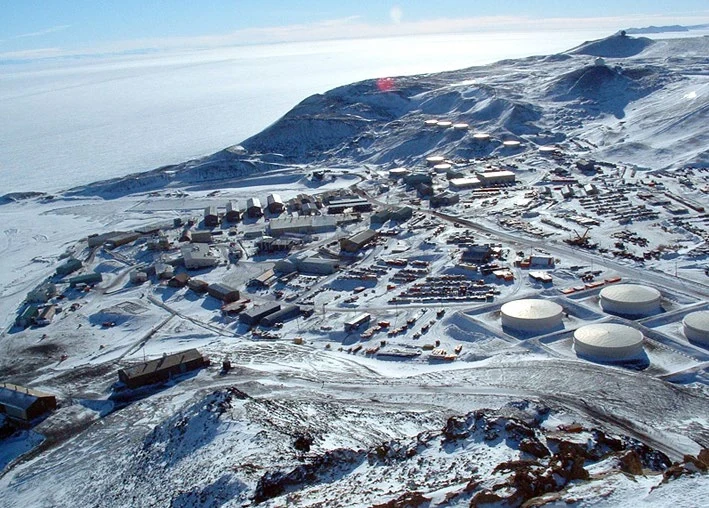
Planned installation · Commissioning date to be confirmed. Equipment images illustrate the selected technology; they do not show an installed system at McMurdo Station.
Energy storage for a demanding location
Supporting a remote research operation calls for more than a large battery. Generation, stored energy, power conversion and controls must work together around the demands of the site. For Antarctica New Zealand, Freedom Won Australia’s planned solution brings these elements together at McMurdo Station, with 11.8MWh of storage and 3MW of power conversion capacity.
The project is designed to support a transition towards greater use of renewable energy through integration with a wind-powered microgrid. Its objectives include reducing dependence on diesel, improving power quality and reliability, supporting energy cost management and providing an energy backup source. These are the intended outcomes of the project, with performance to be assessed once the system is commissioned and operating.
The wider energy setting is explained by Antarctica New Zealand’s Ross Island Wind Energy system overview. The network connects Scott Base and McMurdo Station, and the wind energy upgrade includes battery storage to retain excess wind generation. That context explains the role of storage: helping make renewable electricity available beyond the moment it is generated.
The planned system, component by component
| Component | Quantity and rating | Role in the project |
|---|---|---|
| Freedom Won megaTower Extra | 8 batteries · 11.8MWh combined | Battery energy storage |
| EPC Power 3.2L | 2 converters · 1.5MW each · 3MW total | Power conversion |
| Freedom Won EMS Pro | 1 system | Energy management and monitoring |
| ComAp control network | 1 network | Coordinated system controls |
| Installer and EPC | Freedom Won Australia | Research, conceptualisation, supply, installation and training |
| Commissioning | To be confirmed | Operating results will follow commissioning |
The battery and conversion ratings answer different questions. The 11.8MWh figure describes the combined energy capacity of the eight batteries. The 3MW figure describes the combined rating of the two power converters. The project does not have 11.8MWh in each battery, and the 3MW conversion rating does not describe the site’s continuous demand.
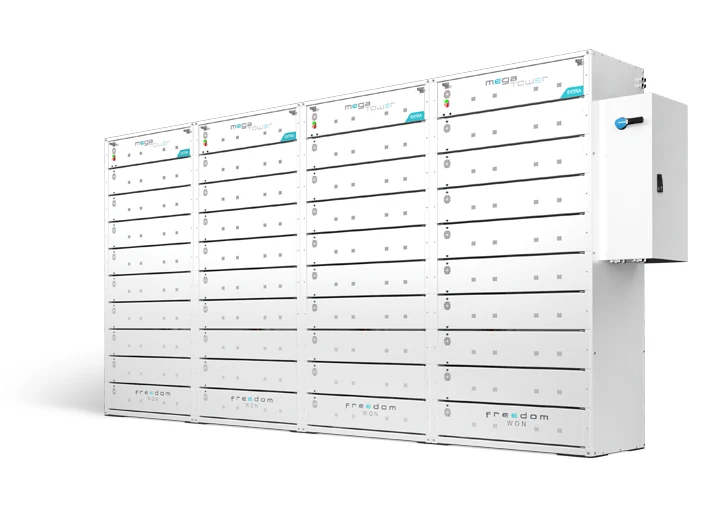
Eight batteries are specified for 11.8MWh of combined storage. Product illustration.
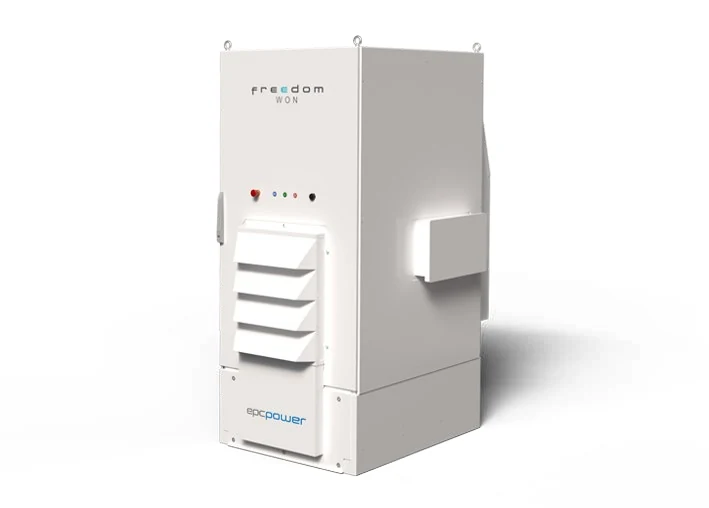
Two 1.5MW units provide 3MW of planned conversion capacity. Product illustration.
Why megaTower Extra fits a system of this scale
The megaTower platform allows a project to be assembled around substantial energy requirements using multiple battery units. In this configuration, eight megaTower Extra batteries provide the specified total capacity. Freedom Won’s megaTower Extra product specifications distinguish total energy, usable energy, discharge limits and operating conditions. Those distinctions matter when translating a battery rating into a complete site design.
For a project owner, the useful question is how the selected storage capacity supports the required operating duty. Available energy depends on the permitted discharge window, the reserve maintained for backup and the losses and auxiliary requirements of the complete installation. The operating strategy also determines when the system charges and when energy is released to the microgrid.
A simple capacity-to-power calculation illustrates the scale: 11.8MWh divided by 3MW is approximately 3.93 hours. This is an idealised ratio using the project’s headline ratings. It assumes all total battery energy is available at constant rated conversion power and excludes losses, reserve, auxiliary consumption and operating restrictions. It is not a promised backup duration or a prediction of how McMurdo’s loads will be supplied.
Bringing wind, storage and controls together
Wind generation and site electricity demand change over time. Storage provides another resource for managing that balance, but useful performance depends on the control strategy as well as the equipment capacity. The planned solution includes Freedom Won EMS Pro for management and monitoring and a ComAp control network to support the coordinated system.
The integration work connects the battery’s permitted operating limits with the capabilities of the power converters and the requirements of the microgrid. Control priorities need to account for renewable energy availability, the battery’s state of charge, the site’s demand and the reserve required for the intended service. The resulting installation must be considered as a complete energy system.
This is where FWA’s end-to-end approach matters. For commercial and industrial solutions, we take on integration risk within the agreed project scope. Customers can discuss the energy objective, battery platform, conversion equipment and controls together, with the interfaces addressed as part of the project rather than left as separate product purchases.
From the first conversation to operator training
First contact for the Antarctica project took place in September 2023. Freedom Won Australia’s scope covers research, conceptualisation, supply, installation and training. That breadth reflects the work involved in moving from an energy requirement to equipment that can be installed, commissioned and operated as a coordinated system.
Research and conceptualisation establish how the proposed storage system will serve the application. Supply brings the specified equipment together. Installation connects that equipment with the site and its supporting infrastructure. Training helps the responsible operators understand the system’s intended use and the records, monitoring and support arrangements needed after handover.
The commissioning date remains to be confirmed. This project page therefore describes the planned configuration and intended purpose. It does not present fuel savings, emissions reductions, reliability improvements or financial returns as results already achieved.
Measuring the outcome after commissioning
The value of a renewable energy storage project becomes clearer when operating results are measured against a defined baseline. For this application, useful measures would include renewable electricity accepted by the microgrid, battery energy charged and discharged, diesel consumption, system availability and the delivery of the agreed operating service. These are suggested evaluation measures, not reported project results.
Fuel and emissions comparisons need a consistent measurement period and a clear explanation of changes in site demand or generation. Financial analysis also needs the actual fuel, maintenance and operating costs relevant to the project. We have not published an estimated savings percentage because the supplied project information does not establish a measured baseline or a verified operating result.
Explore the range of FWA project applications
Antarctica is the featured example of planned utility-scale storage. Other FWA projects show how battery systems are configured for different operating needs. LCM Store in Santo, Vanuatu combines 885kWh of battery storage with 150kW of hybrid inverter capacity, with provision for future storage expansion. Unity Hub in Slacks Creek, Queensland combines 180kWh of storage, 60kW of rooftop solar and 60kW of total inverter capacity.
These examples are useful for understanding scale and system architecture. A new installation still needs its own load profile, generation assessment, operating priorities and integration design. Explore our project portfolio, battery range and technical downloads to identify the next conversation for your application.
Discuss an end-to-end storage solution
Freedom Won has manufactured batteries since 2010, and Freedom Won Australia has supplied the region since 2019. Our team works with commercial, industrial and remote-site customers to connect an energy requirement with the appropriate battery technology, conversion equipment and controls.
Talk to Freedom Won Australia about your location, current generation, energy demand, operating constraints and project timing. We can help define the next steps and connect you with the relevant supply or solution partner. For a remote microgrid, bring the whole operating challenge to the discussion so the solution can be designed around the service you need.