
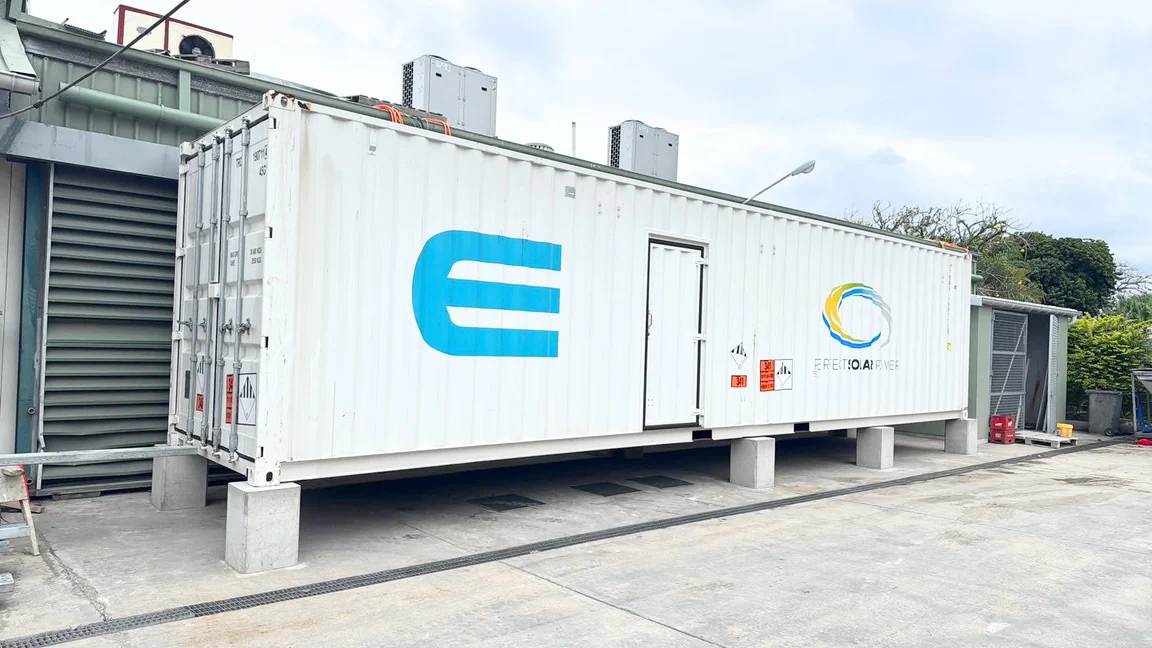
A useful commercial battery proposal begins with how the business operates. A workshop, a supermarket and a community venue can use similar amounts of electricity over a month while needing quite different storage systems. Their peak loads, operating hours and available solar generation shape the design.
What should a commercial battery system achieve?
Identify the job you want storage to do. You may want to use more of your daytime solar after sunset, manage expensive periods of grid consumption, or provide a defined backup supply. Set those priorities before comparing equipment.
Battery storage can support greater solar self-consumption and peak-demand management. The value depends on the site and the way electricity is charged. Review the tariff and the load pattern together. NSW Government battery storage guide
Separate three different business cases
Solar self-consumption, demand management and backup can overlap, but each needs its own evidence. For solar self-consumption, ask how much generation would otherwise be exported, when the business could use that stored energy, and whether the proposed battery will have room to charge. A large solar array does not establish that there is a matching daily surplus available for storage.
For demand management, have the proposal identify the tariff component being targeted and the measurement interval used by the electricity retailer. Ask the modeller to show the relevant peaks in the original consumption data. An annual consumption total cannot show whether a short, intense demand event or a longer operating period drives the requirement.
For backup, agree which loads have priority and which can remain off. A business may choose to support refrigeration, communications and a small office while leaving larger production equipment outside the backed-up supply. That choice changes both the power requirement and the energy budget. Request a written description of what staff should expect during an outage and how normal operation resumes.
Compare power and stored energy
Battery energy capacity, expressed in kilowatt hours (kWh), describes the energy that can be stored. Power, expressed in kilowatts (kW), describes the rate at which energy can be delivered. The usable capacity, discharge limits and inverter rating all matter when matching equipment to a load. Australian Government explanation of battery capacity and power
Ask the system designer to show how the selected equipment addresses both the size of your load and the period you want to support. Have backup requirements identified explicitly in the proposal, including the circuits or processes covered and the assumptions used.
A simple example to discuss with your designer
Suppose a business identifies a steady 30kW essential load that it wants to support for four hours. The load-side energy requirement is 30kW × 4h = 120kWh. This is an illustrative calculation, not a battery recommendation. A real design must account for usable depth of discharge, conversion losses, reserve, changing demand and any power needed to start equipment.
Ask the proposal to show both the load-side requirement and the selected battery nameplate capacity. Then ask how the inverter and battery will meet the peak demand. Separating these questions makes it easier to compare two quotations that use different equipment or assumptions.
Prepare the information that makes a proposal useful
- Recent electricity bills and the applicable tariff.
- Interval consumption data, where available, and typical operating hours.
- Existing solar, inverter and generator details.
- Any planned changes to equipment, production or opening hours.
- Your priorities for stored solar, backup and future expansion.
Include unusual periods such as seasonal demand, weekend shutdowns and overnight operation. Ask for the proposed control strategy and the conditions behind any cost-saving estimate to be explained in the written proposal.
Ask for a transparent savings calculation
A useful financial model separates physical energy flows from their dollar value. As a deliberately simplified example, suppose a model shifts 100kWh of solar energy into a later period, and the assumed difference between the avoided import price and the forgone export credit is $0.20 per kWh. Multiplying those inputs produces a $20 gross daily spread before losses, operating costs and other adjustments. These are invented inputs for explaining the calculation, not an Australian tariff forecast or an FWA savings claim.
The next questions determine whether that calculation means anything for your site. How many days contain enough surplus solar? How much of the stored energy reaches the load? Does the tariff change by season or time of day? What allowance has been made for reserve energy, degradation and periods when the system is unavailable? Ask for a sensitivity comparison showing a lower-utilisation case alongside the expected case. Avoid multiplying an ideal day by 365 without evidence that the pattern repeats.
Compare the scope behind the quoted price
Create one comparison sheet for the competing proposals. Include the battery and inverter models, controls, switching equipment, monitoring, installation work, commissioning and ongoing support. Record which items are included and which remain provisional. A quote with a lower equipment price may leave a larger amount of site work unresolved; an inclusive quote should make that scope visible.
Ask who is responsible for coordinating the battery, inverter and site controls, and who will provide the operating instructions. Also record the approved document revisions and the point at which the final equipment schedule is confirmed. This makes later changes easier to evaluate and helps the business understand whether a substitution affects the original objectives.
Make future expansion a defined option
If you expect a new production line, electric vehicle charging or longer trading hours, describe the change in the initial brief. Ask which parts of the design allow expansion and which would need replacement. Additional battery energy does not automatically increase inverter power, and physical space for another cabinet does not by itself establish an approved electrical arrangement. A staged proposal should distinguish the capacity installed now from the equipment and work needed later.
Explore configurations and project examples
The Freedom Won SOLVA range provides different approaches to commercial storage. AC, DC and RT models have distinct integration arrangements. Our guide to SOLVA configurations explains the starting differences, while the document centre provides the technical material for a model-specific review.
At LCM Store in Santo, 885kWh of battery storage and 150kW of hybrid inverter capacity work with solar and generator backup. The installation shows how generation, storage and conversion can be brought together around a commercial site’s demand. Compare its design priorities with your own operating hours, loads and charging opportunities. Read the LCM Store case study.
What should be measured after commissioning?
Agree the reporting period and baseline before installation. Useful records include stored energy delivered in kWh, site peak demand in kW, solar generation, grid imports and the hours critical circuits are supported during a defined test. Compare equivalent operating periods and explain changes in opening hours, production or weather. These records provide a basis for assessing the system against the original project priorities.
Make the next conversation specific
Bring your site information to Freedom Won Australia or an appropriate reseller or solution provider. Ask which configuration is proposed, which documents apply and how the design will be checked against the priorities you have identified.
Send recent bills, interval data and your operating priorities to Freedom Won Australia. A clearly scoped brief gives the team a practical starting point for discussing the appropriate product family and system configuration.
Frequently asked questions
How much battery storage does my business need?
Capacity depends on the load profile, operating hours, available solar and intended use. Prepare interval energy data and ask for a site-specific assessment.
Can I add storage to existing solar?
The proposed battery, inverter and controls need to be assessed alongside the existing equipment. Check the exact model combination and integration requirements with the system designer.
What information should a commercial quote include?
Ask for the exact equipment, usable capacity assumptions, power limits, controls, operating modes and documentation, together with the site data used to select them.