
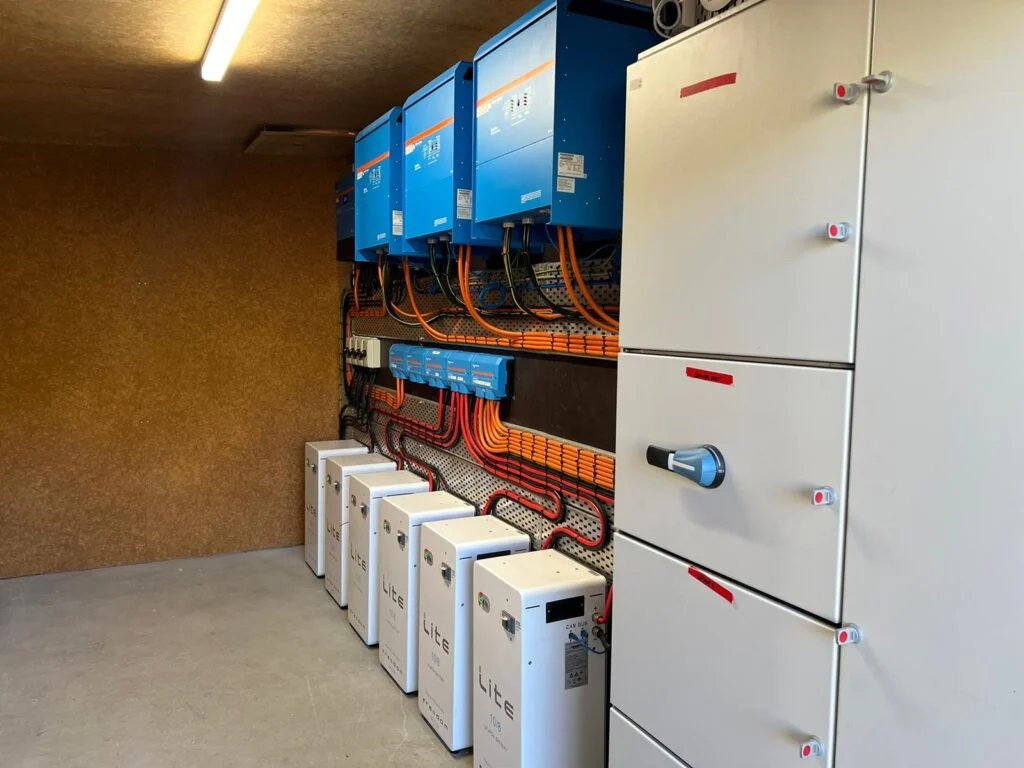

A well-designed battery system should make everyday energy use easier to manage. For a rural property, that might mean keeping refrigeration and communications running overnight. For a business, it might mean using stored solar during the evening. With the right combination of Victron conversion equipment and Freedom Won storage, the system can be designed around those priorities.
The starting point is the job the system must perform. A battery stores energy; an inverter converts power; controls coordinate the equipment. Selecting those elements together helps turn a product purchase into a system that suits the property. This guide explains the relationship and the information to bring to a conversation with Freedom Won Australia.
How Victron technology works with Freedom Won batteries
In supported LiTE and eTower installations, the battery management system communicates with a Victron GX device over CAN bus. Specified MultiPlus and Quattro models provide power conversion, while the controller coordinates information between the devices. Hardware generation and software versions matter, particularly when upgrading an older installation. Check the complete equipment combination before ordering. Read Victron’s Freedom Won integration guide.
For a customer, the practical question is whether the quoted equipment forms a supported combination. Ask for the exact battery designation, inverter model, controller and relevant software versions. A description such as “Victron system with lithium storage” leaves too much unspecified. The written proposal should identify the operating modes, the loads supplied during an outage and who is responsible for commissioning the complete system.
Victron and Freedom Won in practice
At a Vanuatu off-grid farmhouse, 10kW of solar works with a 15kW Victron Quattro and two LiTE Home 15/12 52V batteries. A New Zealand three-phase installation uses three Victron Quattro inverters and six LiTE Home 10/8 52V batteries. These systems combine generation, conversion and storage at different scales to suit their sites. Explore both installations in our FWA project collection.
The two LiTE 15/12 units in the farmhouse example represent 30kWh of nominal storage based on their model designations. The six 10/8 units in the New Zealand example represent 60kWh nominal. Those calculated totals describe the named equipment; they do not establish a guaranteed backup duration. Available energy, operating reserve, conversion losses and the actual demand all influence how long the installation can supply its selected loads.
Start with the evening and overnight load
For a property with solar, separate the electricity consumed while the sun is available from the energy needed after generation falls away. A household may have a modest overnight baseload but a substantial cooking or heating peak. A workshop may stop production at sunset while refrigeration runs continuously. Looking only at a monthly bill hides those differences.
A simple planning example makes the distinction clear. An average 1.5kW load operating for eight hours requires 12kWh at the load. This is arithmetic, not a battery recommendation: 1.5 multiplied by eight equals 12. The design still needs allowances for losses, reserve and the selected battery’s usable energy. If a 5kW appliance starts during that period, the inverter and battery also need enough instantaneous output to support the combined demand.
Our battery kW and kWh guide explains why those two quantities should be assessed separately. Bring measured consumption where available, together with a list of important appliances and their operating times. That gives the project discussion a stronger foundation than choosing a battery solely by cabinet size.
Choose the battery family around the application
Modular storage may suit a project that needs an agreed expansion path; a larger cabinet may suit a different load or installation layout. Compare these options in our eTower planning guide and LiTE Home selection guide. Select the battery generation alongside the inverter and controls, so any later expansion remains within the supported system design.
Future expansion deserves attention before installation. Ask which additional battery units can be added, whether there are generation or firmware restrictions, and whether the original inverter, protection and physical layout leave room for the intended change. Record the permitted expansion path in the proposal. Buying more storage later can be useful, but it should follow a documented system design.
Agree on what backup actually includes
Write down the circuits that matter most. Communications, lighting and refrigeration may be priorities; a large workshop machine or electric water heater may be optional. This creates a clear brief for the installer and gives the owner a realistic understanding of outage operation. A whole-building connection does not mean every appliance can run simultaneously for an unlimited period.
For three-phase sites, ask how loads are distributed and what happens if one phase carries a disproportionately large demand. For properties with a generator, include its make, rating and operating constraints in the brief. The final arrangement must account for all energy sources and the way they are controlled. These are design questions for the qualified installer, rather than settings to experiment with after handover.
Make monitoring useful to the owner
A useful handover should explain what the owner can see and what action to take. Ask the installer to demonstrate the battery state of charge, current operating mode, solar production and any relevant alerts. Agree who receives fault notifications and who should be contacted first. A dashboard becomes valuable when its readings can be interpreted in the context of the site.
Keep a commissioning record with the system documents. Include equipment identities, the agreed reserve, the supported operating modes and the service contact. Request a demonstration of the expected outage behaviour where it is safe and appropriate for the installation. That creates a practical reference for future servicing or changes to the household’s demand.
Plan a supported system with Freedom Won Australia
Talk to Freedom Won Australia about the storage capacity and integration options for your property. Send your location, existing equipment details and main objective through our project enquiry page. For an existing Victron installation, equipment-label photographs and commissioning documents help us identify the version and focus the discussion on a suitable upgrade.
Explore our integrated storage solutions and reseller and solution-provider network to find the next step. The aim is a coordinated purchase: a suitable Freedom Won battery, a verified inverter relationship and a clear installation and support plan. That is how an impressive collection of components becomes a useful energy system for the property.
Frequently asked questions
Does every Victron inverter work with every Freedom Won battery?
No. Check the exact hardware, battery family, controller and software against the current integration documentation. Some older equipment has limitations.
Can I estimate backup duration from nominal capacity?
Nominal capacity alone is insufficient. Account for usable energy, reserve, losses and the actual loads, while checking the system’s power capability separately.
What should I send FWA for an existing Victron system?
Provide the site location, equipment model details, installation documents, available consumption data and the outcome you want from the battery system.
Related reading
Sources & documentation
Technical references: Freedom Won Australian interfacing guide. Product datasheets, manuals and project case studies: FWA downloads.